Friday, June 7, 2013

Guest Post: Avoiding Retirement Pitfalls


Are you ready to make the leap?

Before you do, take action to avoid these retirement pitfalls. Making intentional choices will prevent your next phase of life from being stressful, when it should be peaceful. As others have undergone the transition to retirement before you, you can learn from their mistakes about how to handle debt and investments along with making sure both you and your spouse are ready to make this change.

Retiring with large amounts of debt: It will be difficult to manage your finances in retirement, if a significant portion is going immediately towards old credit card debt or unpaid student loans. At least try to make a dent in these before retiring, especially as these sorts of debt will continue to cost you in interest for sums of money that may have originally been much smaller.

Purchasing too much of your company's stock: While part of your 401(k) may allow you to purchase your company's stock at a lower price, you still want to limit how much you spend. Because you are already dependent upon the well-being of the company for your salary, consider only putting 10 percent of your investment funds toward your company. This will protect you in the future, so that if your company struggles, the impact on your personal finances will be smaller.

Not diversifying investments: This relates to the previous pitfall. Regardless of how early or late you start investing; relying on only a few stocks or mutual funds puts you at risk. Even though it may seem simpler to manage a basic portfolio, you will leave yourself vulnerable to market volatility. Instead, ensure your portfolio is balanced, containing multiple kinds of stocks and various sizes of bonds.

Your finances are not the only area to put in order for retirement. Take the time to also examine the relational aspect of making this huge life change.

Not coordinating retirement goals with your spouse: As you near the time you intend to retire, it is important to communicate your hopes and plans with your spouse; making income changes will affect you both. Not every couple is ready – both financially and emotionally – to retire at the exact same time. Make sure to discuss how one of you leaving your job will impact the other.

Another aspect of retiring together is looking at how you will be spending money after retiring. Do you have the same lifestyle expectations as your spouse? Do you have the same ideas as far as spending on hobbies or vacations? Answering these questions early will help to ease conflict and put together a plan that meets both of your needs.

Not making sure your spouse has access to funds: As you put money aside, you will want to make sure that either your spouse has power of attorney or holds accounts jointly. Skipping this step can become a major obstacle if there is an emergency like a stroke or premature death. Without a name on accounts, your spouse may have to file a petition to gain access to retirement accounts. Taking the time to prepare for both you and your spouse will safeguard the money that you worked hard for.


Alanna Ritchie is a content writer for Debt.org, where she writes about personal finance and little smart ways to spend (and save) money. Alanna has an English degree from Rollins College.

Thursday, June 6, 2013

The Blog in Wordle

Today I put my blog through Wordle to see if what I am writing about is truly me.  I think I will try to do this a couple times a year to see how the blog evolves. Check it out!

Wordle: Browns Balanced Life

Monday, June 3, 2013

Safeguarding Your Legacy

In the fifth lesson of The Legacy Journey, Dave Ramsey and his daughter team up to talk about the importance of safeguarding your legacy.  In order to protect your future legacy you have to safeguard your life today in four key relationships:
  1. Personal
  2. Marriage
  3. Children
  4. Others (Friends/Extended Family)
Dave and Rachel took each of these key relationship and focused on three areas of each one:
  1. Ownership - remembering that God owns everything
  2. Magnification - whatever you are will be magnified as you build wealth
  3. Community - the importance of Godly counsel 
In this post I will summarize each of the three areas using the four key relationships. 

Personal:
  1. Ownership - Everything we own belongs to God, we are just his managers. 
  2. Magnification - We need to have fanatical integrity in all areas of our lives.  The more money we make the more of what we are in our core will show up. 
  3. Community - Each of us should have a mentor, a student and Godly friends. 
Marriage:
  1. Ownership - Marriage is a team sport.  As a couple work together to manage God's resources as a team. Anna and I work together in all areas of finances as a team.
  2. Magnification - Whatever is wrong in your marriage will be magnified as your wealth increases.  Take care of your marriage and work on areas of weakness. 
  3. Community - You will become more like the people who you hangout with.  Make sure to be nurturing healthy relationships with other Godly couples.  Anna and I are happy that we have found a small group in our church of strong Christian couples.
Children:
  1. Ownership - It is very important to teach the next generation how to use their financial blessings and your legacy to further the Kingdom of God.  They must know they are God's managers as well.  Parents are the primary mentors for their children and we must take this responsibility seriously by modeling the behaviors we want our kids to learn.  More is caught by our children than is directly taught. Another thing Rachel focused on was making sure to include kids in family giving.  We used FPU, Jr. with William and he loved it.  William already understands way more than I did and will have a bright future. 
  2. Magnification - Parents - know your kids.  Know how your kids are wired because as they grow their strengths and struggles will be magnified as well. 
  3. Community - It is important for parents to know who their children's friends are.  They will become more like the people they hangout with.  Help them get connected in environments that have good influences like church youth groups.  Don't forget to make sure that your friends are the kind of influences you want for your children.  Also, remember to use teachable moments in life to help your children grow in their knowledge and understandings of life.  I know that we want William to have the best influences we can around him and at times that means that we have to make some hard decisions.
Others:
  1. Ownership - Knowing that God owns everything in your life, we should think about how God would want his money to be used in situations that involve family and friends.  You may have to deal with issues of entitlement.  Make sure not to enable the bad behavior of your family or friends with God's money. 
  2. Magnification - Your success can reveal the true character of your friends and family.  Their character will be magnified as well. 
  3. Community - Make sure to be seeking Godly counsel.  Quality relationships with others will help you make good decisions. 
This was a great lesson that dealt with how building a legacy will impact the relationships in your life.  It is important to realize how money can impact these areas so you can safeguard your relationships and legacy against these threats.

What key relationships do you need to work on safeguarding? My focus will be Anna, William and then other friends and family!

Saturday, June 1, 2013

My Goal Update as Summer Begins


Summer break is approaching for students and staff and it is a great time to reflect on your goals for the year and make some adjustments to finish the final 7 months strong.

Financial Wellness 
By the end of 2013, we would like to pay off over 20% of the current outstanding debt on our house.  To do this Anna and I will continue to work together with our finances  find more opportunities to earn and save more money.  We have also considered looking at selling our house, since we probably have a larger house then we really need. 
UPDATE:  Anna and I are still on pace to surpass this goal in 2013.  We updated our financial records and made some progressions and are on pace to be able to be complete debt free by July 2016.  l  I believe we will continue to work with gazelle intensity to get out of debt even earlier. 
Occupational Wellness 
One of my goals this year is to have portfolios prepared for every one of my students showing their specific progress based on the Humanities IB-MYP Objectives for 6th grade.  In order to do this, I will continue to stay organized and make sure to be given specific and meaningful feedback on all major assessments throughout the year. 
UPDATE: I have completed this goal.  Students will get to take their artifacts home next week.  It has been a great school year.  I am looking forward to a summer full of activities to rejuvenate and prepare for another challenge next year. 
Physical Wellness 
I have many physical wellness goals this year.  One of my goals is to complete the entire week of RAGBRAI in July.  By the end of 2013 I would like to be back at my pre-broken foot weight. 
UPDATE: I am cleared for physical activity that doesn't involve kickboxing or constant jumping.  I am adding many physical activities back into my schedule and will work on getting back into shape.  I will be participating in RAGBRAI in July, but due to a training/conference for the NEA position I was recently elected to I will have to leave 2 days early.  I have updated my 2013 goal to get back to my pre-broken foot weight.  This will mean I need to loose another 29+ pounds between now and December 31st.  One of the ways I am doing this in June is  being part of an fitness challenge accountability group.  Come join me!
Environmental Wellness 
One of my goals in 2013 is for William to complete the "Leave No Trace" requirements for cub scouts to learn the importance of taking care of our environment. We will work with William to learn to be intentional with doing things outdoors and indoors to help protect our planet. 
UPDATE:   William only has to do a presentation with a poster to his pack to complete the requirements.  The pack did not have a pack meeting in May, so I am trying to organize a time that with his den/pack leaders when he can complete this component of his achievement.  Hopefully William will be able to do this in June. 
Intellectual Wellness 
My goal for 2013 is to read at least 100.  As Charlie Jones said, "Five years from today, you will be the same person that you are today, except for the books you read and the people you meet."  I want to read some good books, so that I can be a better person five years from now. 
UPDATE:  I have currently read 39 books in 2013 and am working on several other ones.  May was a very busy month with not much time to pick up a book and read, due to this for the first time all year I am behind the pace I need to maintain to reach 100 books.  


Emotional Wellness 
I will continue to blog about my throughs and feelings at least once a week throughout 2013. I will also post additional content on my blog's facebook page.  
A friend shared a great idea on facebook that our family has decided to put into action in 2013.  We will be keeping a "Good News Jar" to write notes of all the good things happening this year to open up and read on December 31st, 2013.   
UPDATE:  Summer is going to be busy and I will be focusing on being thankful and writing those comments both in our jar, through social media and here on my blog when the time allows. 

Spiritual Wellness 
After finishing reading the Bible again in 2012, I plan on starting over in 2013.  In addition to reading the Bible, I will be using Tony Dungy's The One Year Uncommon Life Daily Challenge for my personal quiet time in 2013.  Another spiritual wellness goal of mine for 2013 is to begin weekly devotionals as a family at least 5 days a week using Bruce Wilkinson's Family Walk.
UPDATE:  Anna and I are doing a couple new devotionals as a couple.  We will be completing our small group series on marriage on June 16th with our small group as well. 

Wednesday, May 29, 2013

The ABC's of Gratitude

This week I listened to Max Lucado's final sermon of his series on prayer in which he focused on saying thank you to God.  One of the exercises that he shared during the sermon was using the alphabet to help count your blessings.  I have decided to do this to focus on my blessings instead of shortfalls or gripes.

  • A is for Anna - I am thankful for Anna, my wife, for her support and everything she does for our family.
  • B is for Blog - I am thankful for this blog that allows me to share my thoughts and keep myself accountable to what I know is right.
  • C is for Church - I praise God that our family belongs to a church that does so much for people in our community.
  • D is for Dates - I am thankful for opportunities to take my wife on dates, even though the opportunities are too far apart. 
  • E is for Erasers - I am grateful for the ability to erase mistakes and seek forgiveness when I am in the wrong. 
  • F is for Friends- I am grateful to have a friends that support me and my family in various areas of my life. 
  • G is for Grace - I am thankful for God's grace which allows me to have hope for the future.
  • H is for Hope - I am thankful for being able to have hope in the future and feeling content.
  • I is for In-laws - I am thank for my wife's parents who have given us a great example of a strong Christian couple and how to live a generous fruitful life.
  • J is for Jesus - I am grateful for a relationship with Jesus Christ. 
  • K is for Kindness - I am thankful for being able to see acts of kindness everyday of my life from strangers and people I know. 
  • L is for Love - I am thankful for the opportunity to love others and be loved.
  • M is for Mom - I am thankful for my mom who has showed me countless times how to be strong and do what is right even when things are going on.
  • N for Nieces - I am thankful for two beautiful nieces that I am looking forward to watching grow in the coming years. 
  • O is for Organization - I am thankful when things are organized.  It helps me be less stressed, be more productive and enjoy myself. 
  • P is for Podcasts - I am thankful for everything I am able to learn from podcasts I listen to.  
  • Q is for Questions - I am thankful for the ability to ask questions.  I also love hearing all of the questions that my son and my students ask. 
  • R is for Riding - I am thankful for being able to ride my bike again and looking forward to particpating in RAGBRAI. 
  • S is for Students - I thankful for the opportunity to impact the lives of hundreds of students every year as a teacher. 
  • T is for Teachers - I am thankful for people who have taught me and are teaching my son.
  • U is for Union - I am thankful for my teacher's union that stands up for our members and our students everyday.
  • V is for Vacations - I am thankful for opportunities to relax and recharge on vacation.
  • W is for William - I am thankful for my son who reminds me to be grateful for the little things.
  • X is for X-Ray - I am thankful my last X-Ray has given me the green light to be physically active again.
  • Y is for Yesterday - I am thankful for the many wonderful memories I have of all my yesterdays. 
  • Z is for Zero - I am thankful that the date that our family will have zero debt is coming in just 38 months.
So what are you thankful for?

Monday, May 27, 2013

The Road to Awesome

The fourth session of The Legacy Journey is The Road to Awesome and is taught by Jon Acuff.  I was surprised to watch the whole session without seeing Dave.  It shows that he is really is committed in leaving a legacy beyond himself with the company he built to help other people.  Jon starts stalking about the importance of using our passions and do what God has created us to do.  The first step is to change our lives to be structured in a way that we can deliberatively do this.

Jon laid out five stages on the road to awesome.  These stages used to be based on age, but that is no longer the case.  Our place on the road to awesome is no longer about when we were born, but when we decide to get started.  Now is the perfect time to start because we cannot skip stages, but we can shorten them.

Stage 1: Season of Learning:
This is the stage in which we figure out who we are and what we are about.  We don't want to just "find our purpose" but we want to live with purpose.  During this state we will be experimenting with different passions.  We need to remember that it is okay not to be amazing at everything we try the first time.  The only thing we can control for sure in our journey is our starting line.

Stage 2: Season of Editing:
During this season we are subtracting things out in order to narrow our focus.  We need to ask ourselves many questions like, "If I died today, what would I regret?"  When you figure out your answer to that question then check your schedule to see if you are actually spending your time on those things.  We work on finding what gives us the most joy and focus on those things.

Stage 3: Season of Mastering:
Now that we have narrowed our focus, we need to gain as much experience as we can so that we can get really good at our passions.  Jon gave us three times on how to gain this valuable experience:
  1. Volunteer somewhere - you pay time to receive experience
  2. Get a part-time job - figure out if you will love/hate something as an employee before jumping all in. 
  3. Be led - find wise mentors!
Stage 4: Season of Harvesting:
This is a stage that you are working within your passions along with lots of support.  You will need support from two groups of people.  The best way to get support from others is to support other people the way you want/need support. 
  1. Your Inner Circle - this should be your spouse if you are married.  The worst place to put your spouse is on the opposite side of your dreams. 
  2. Your Outer Circle - You will need to get support and feedback from friends and family too. 
Season 5: Season of Guiding: 
This stage is about helping others along their road to awesome.  You will be guiding others whether you know it or not, so be intentional about it.   Ask others questions about their goals/desires and build on relationships with those who can mentor you and you can mentor.  One tip that Jon Acuff gave was to tie mentoring building into something you both already care about so it is more likely to happen. 

We all need to get up and get started today to begin our legacy journey's no matter how old we are.  Stages 1-3 need us to be intentional for them to work but stages 4-5 will happen no matter what we do, so we need to be intentional so we harvest and guide within the legacy we want to be leaving behind.  One of Jon's last tips he shared with us was not to compare our beginnings with someone else's middle. We cannot expect to skip stages and be in harvesting guiding when we are just learning and editing, so don't be disappointed when that doesn't happen.  

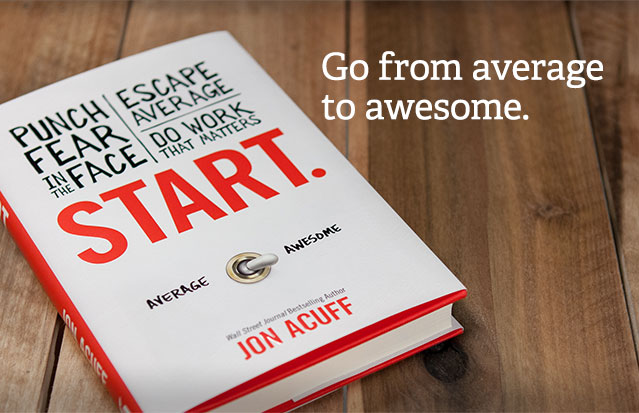
I loved this lesson, it was filled with great information that also can be found in Jon Acuff's new book Start.  I talked about the book before, but I wanted to take this opportunity to have another random book give away.  Enter today using Rafflecopter below. 


a Rafflecopter giveaway

Wednesday, May 22, 2013

The Principle of Contentment

In third session of The Legacy Journey titled, "The Law of Great Gain", Dave Ramsey tells us that the most powerful financial principle is contentment.  This principle is able to do many things in our lives:
  • It is what allows us to get out of debt. 
  • It allows us to live on less than we make. 
  • It allows us to save and invest.
  • It allows us to change our whole view of generosity to be able to give like no one else. 
  • It opens up everything about God's way of handling money to us.
Contentment is not a reaction of circumstances but is part of our character.  Content people don't always have the best of everything, but they do make the best of everything they have. Dave shared four warning signs of spiritual discontentment:
  1. Always be trying to "get rich quick".
  2. Trying to appear wealthy. 
  3. Feeling anxiety about what you don't have.
  4. Allowing jealousy and envy to creep into your mind. 
We need to create a balance in our lives between intensity and enjoyment after getting out of debt.  God
tells us to take care of our own household and if he has blessed you it is Biblical to spend some of your money on your life style, but we need to have a balance.  The spirit of poverty in which wealth is evil is not biblical and neither is the spirit of pride that your wealth came from your hard work.  We need to trust in God with a spirit of gratitude knowing that our wealth comes from God and be in conversations with him on how to manage it.

Dave Ramsey recommends setting a lifestyle budget based on your income that would take care of your family at a reasonable level that God helps you decide.  Then continue to be in conversation with God about how to manage the rest using ratios.  For everything God blesses you with over your base budget you should give your tithe (10%) off the top and pay your taxes.  After these two, you need to set the percentage of your increased income that would go toward increased giving, increased lifestyle and increased investing.  These percentages will not be the same for everyone because God has different plans and purposes for each of us so we need to be in constant prayer to find out what God wants our percentages to be.

The key is to be content is to be grateful where you are.  As a warning, we should not be lazy or take God's blessings for granted.  Are you traveling on your road with contentment?  If not, what would make you content?